
Understanding Salmonella and Shigella Through Comics: A Fun Medical Journey
If you’ve ever struggled to keep the details of Salmonella and Shigella straight, you’re not alone. These two bacteria can be tricky to differentiate, especially when you’re juggling a mountain of medical facts. But what if learning about them could be as fun as flipping through a comic book? That’s exactly what medical comics aim to do—turn complex microbiology into an engaging story you actually want to read. Let’s dive into the world of Salmonella and Shigella through comics and see how this creative approach can boost your understanding.
Why Use Salmonella and Shigella Comics for Learning?
Comics aren’t just for superheroes and funny strips anymore. They’re powerful educational tools, especially in medicine. When it comes to Salmonella and Shigella, comics can:
Simplify complex concepts with visuals and storytelling.
Help you remember key differences through memorable characters and scenarios.
Make studying less intimidating and more enjoyable.
Encourage active learning by engaging both your visual and verbal memory.
Imagine a comic where Salmonella is a sneaky villain causing food poisoning, while Shigella is a crafty troublemaker invading your intestines. Suddenly, these bacteria aren’t just names in a textbook—they’re characters with motives and actions you can visualize.
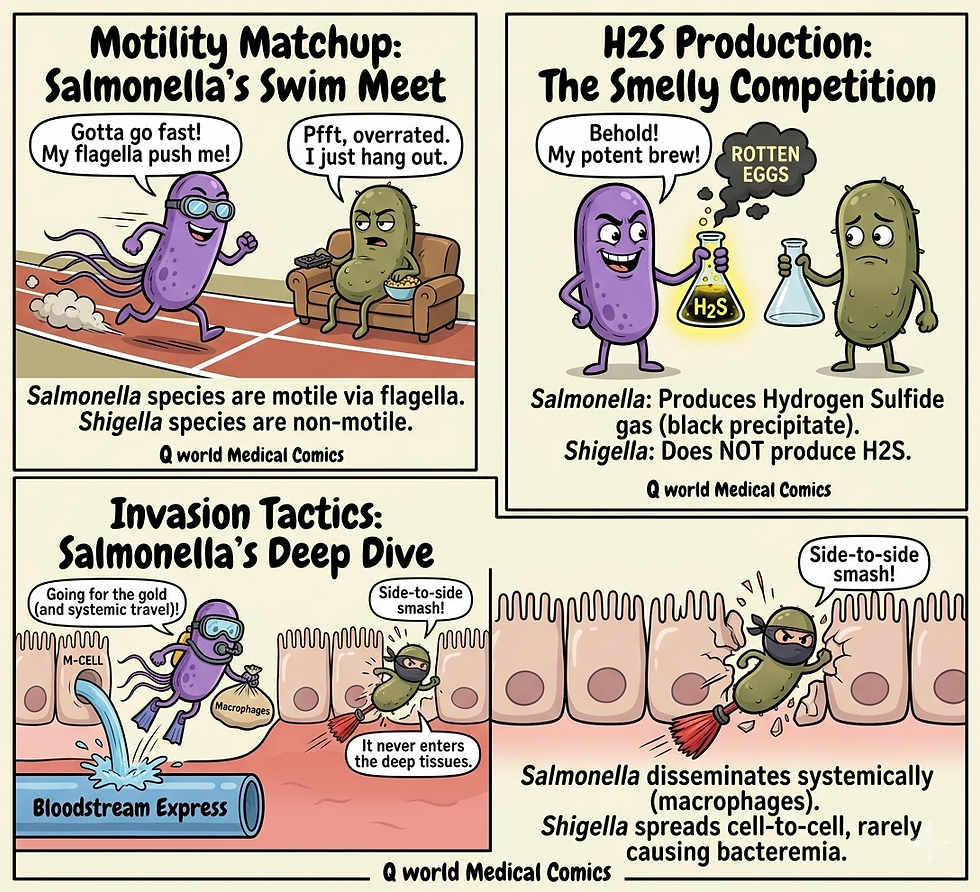
Comics bring bacteria to life, making learning more interactive and fun.
Exploring Salmonella and Shigella Comics: What Makes Them Effective?
You might wonder, what exactly makes these comics so effective for medical education? Here’s the scoop:
Visual storytelling helps break down the bacteria’s life cycle, symptoms, and treatment.
Humor and relatable scenarios reduce the stress of memorizing dry facts.
Sequential art guides you through the infection process step-by-step.
Use of analogies and metaphors makes abstract concepts concrete.
For example, a comic might show Salmonella as a sneaky thief slipping into your gut through contaminated food, while Shigella is portrayed as a guerrilla fighter causing inflammation and damage. These vivid images stick in your mind far better than plain text.
Plus, comics often include quick quizzes or “Did you know?” bubbles that reinforce learning without feeling like a test. This interactive style is perfect for busy medical students and professionals who want to maximize study time.

Medical comics complement traditional textbooks by adding visual and narrative elements.
How to Differentiate Between Shigella and Salmonella?
Now, let’s get down to the nitty-gritty. How do you tell Shigella and Salmonella apart? Comics can help here by highlighting the key differences in a way that sticks.
1. Transmission
Salmonella often spreads through contaminated food, especially undercooked poultry, eggs, and dairy.
Shigella spreads mainly via the fecal-oral route, often through poor hygiene or contaminated water.
2. Symptoms
Salmonella typically causes diarrhea, fever, and abdominal cramps. It can sometimes lead to more severe infections.
Shigella causes dysentery, which means bloody diarrhea, along with fever and stomach pain.
3. Infectious Dose
Shigella requires a much lower infectious dose—just 10-100 bacteria can cause illness.
Salmonella usually needs a higher dose to cause infection.
4. Pathogenesis
Salmonella invades the intestinal lining and can sometimes enter the bloodstream.
Shigella invades the cells lining the colon, causing intense inflammation and ulceration.
5. Treatment
Both infections may require antibiotics, but resistance patterns differ, so proper diagnosis is crucial.
Comics can portray these differences as a showdown between two bacterial characters, each with unique weapons and tactics. This visual metaphor makes it easier to recall their distinct features during exams or clinical practice.
The Power of a salmonella vs shigella comic
If you want to see this in action, check out a salmonella vs shigella comic. It’s a fantastic example of how storytelling and visuals combine to clarify confusing topics. The comic uses humor, clear diagrams, and memorable characters to explain everything from transmission to symptoms and treatment.
By engaging multiple senses, this approach helps you retain information longer and understand it more deeply. Plus, it’s just plain fun to read!
Practical Tips for Using Comics in Medical Learning
If you’re ready to give medical comics a try, here are some tips to get the most out of them:
Use comics as a supplement, not a replacement. They’re great for review and understanding but should complement your textbooks and lectures.
Take notes while reading. Jot down key points or questions that pop up.
Discuss comics with peers or mentors. Talking through the story can deepen your understanding.
Create your own comic summaries. Drawing your own panels can reinforce learning.
Look for reputable sources. Choose comics created or reviewed by medical professionals.
By integrating comics into your study routine, you’ll find yourself looking forward to learning about tricky topics like Salmonella and Shigella.
Bringing It All Together: Why Comics Matter in Medical Education
Medical education can be overwhelming, but it doesn’t have to be dull. Comics offer a fresh, engaging way to tackle tough subjects. When it comes to Salmonella and Shigella, comics help you:
Visualize bacterial behavior and infection mechanisms.
Remember key differences with ease.
Stay motivated and curious about microbiology.
Build a solid foundation for clinical practice.
So next time you’re faced with a dense chapter on enteric bacteria, consider reaching for a comic instead. You might just find that learning becomes a lot more enjoyable—and effective.
Happy studying, and may your medical journey be as colorful and captivating as a great comic book!


Comments